
The Long Sleep
On the Friday morning that changed surgery forever
Consider, if you will, the full existential horror of what surgery meant for approximately the entire length of human civilisation up until about 1846.
You are awake. Someone is cutting into you. You are (and there is really no more precise or less harrowing way to say this) fully, screaming, conscious.
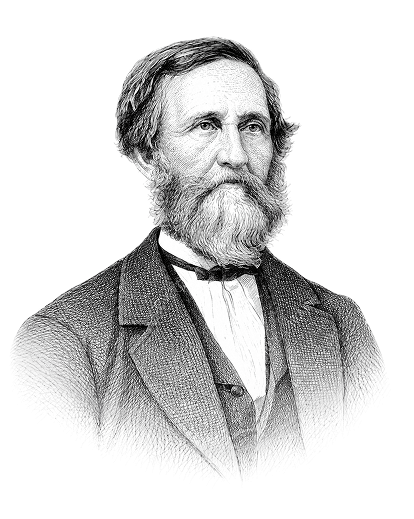
The surgeon's speed was not a matter of artistry but of mercy. Robert Liston, the fastest blade in London, could amputate a leg in under two and a half minutes. He also, in one particularly catastrophic afternoon, accidentally removed a patient's testicles, severed his assistant's fingers, and so thoroughly alarmed a bystander that the man died of fright on the spot. Three people. One operation. A 300% mortality rate. A record that, somewhat incredibly, still stands.
Alcohol. Opium. Biting leather. Prayer. These were the anaesthetics of antiquity. They worked the way a screen door works against a hurricane — gesturally, symbolically, with very good intentions and almost no practical effect.
Something had to give. And in the autumn of 1846, in a Boston operating theatre, before a crowd of sceptical physicians, it did.
“Time me, gentlemen. Time me.”
Chapter I: The Ether Frolics & Very Little Credit
Nitrous oxide was discovered in 1772 by Joseph Priestley and immediately used by absolutely everyone to get magnificently high at parties called (without apparent irony) Ether Frolics. Wealthy young men inhaled it, laughed, fell over, and felt briefly as though the universe had been stripped of its weight and tedium.
The medical establishment watched this and moved on. One chemist did not.
Humphry Davy noted in 1800 that nitrous oxide appeared to abolish pain and might perhaps be useful in surgical procedures. Physicians filed this somewhere between “interesting” and “not our problem” and continued doing surgery on screaming people for another forty-six years.
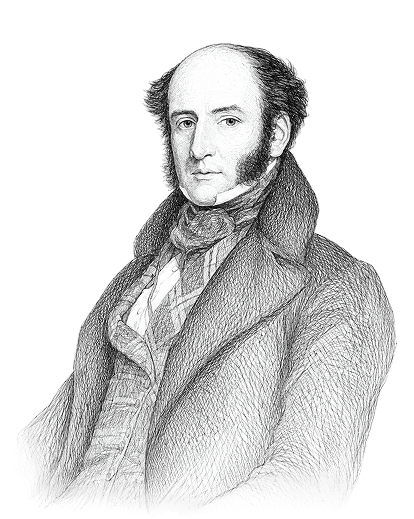
Then there was Crawford Long, a Georgia physician, who in 1842 used ether to remove a neck tumour from a patient who felt nothing. Long, being modest or possibly just not very good at self-promotion, told almost no one and published his findings eight years later, by which point the credit had gone entirely elsewhere. Enter Horace Wells, a dentist from Hartford, Connecticut. In 1844 he watched a man inhale nitrous oxide at a public demonstration, gash his leg badly on a bench, and notice nothing until the gas wore off. Wells watched this with the specific quality of attention that precedes either a great discovery or a terrible mistake, and thought: I should try this on teeth.
He had a colleague pull one of his own(!) teeth while he inhaled nitrous. Felt nothing. Called it the greatest discovery ever made. Arranged a public demonstration at Massachusetts General Hospital. The patient cried out. The crowd jeered. Wells fled in humiliation and spent the next several years in a spiral of depression and chloroform addiction that ended with his arrest, his suicide, and very little else.
History is littered with those who arrived at the right answer slightly too early, before the world had arranged itself into a shape that could receive it. Wells was one of them. There is no particular word for this misfortune (which bothers me).
He had the right idea in the wrong decade, and paid for it in full.
Chapter II: The Glass Inhaler & No Humbug
The credit, when it finally arrived, went to someone else entirely.
William Morton was a dentist and entrepreneur, a combination that tends to produce either innovation or fraud or both. In Morton's case it produced something genuinely world-altering, delivered in a manner that was also, admittedly, fairly fraudulent. He had been experimenting with sulphuric ether for months, testing it on goldfish, chickens, his water spaniel, and eventually himself.
On the morning of Friday the 16th of October 1846, in the surgical theatre of Massachusetts General Hospital, a domed amphitheatre of tiered seats full of physicians who had seen every variety of charlatan, Morton arrived late. This nearly got him removed from the building. He set up his glass inhaler. The patient, a young printer named Edward Abbott, who had a vascular tumour on his jaw, breathed in the ether vapour.
He went under.
John Collins Warren, the surgeon, had been so sceptical he had nearly cancelled the whole thing. He made the incision. Abbott did not move. Did not cry out. Did not grip the armrests or weep or pray or do any of the things that surgical patients had done, without exception, for the entirety of human history. He simply lay there, breathing, while someone cut into his face.
Warren turned to the audience. “Gentlemen. This is no humbug.” Five words. The entire prior history of surgery on one side of them. Everything after on the other.
The word anaesthesia — coined by Oliver Wendell Holmes from the Greek for “without sensation” — entered the language, and almost immediately so did the argument about who deserved credit for it. But the news spread faster than the dispute. Within weeks, ether anaesthesia was being used in London. Within months, across Europe.
“Gentlemen. This is no humbug.”
Chapter III: Chloroform & God's Opinion
Ether had a problem. Well, quite a few problems actually.
It smelled appalling, was highly flammable, and caused nausea so severe that patients sometimes felt the anaesthesia was worse than the surgery. Into this gap stepped James Young Simpson, an Edinburgh obstetrician with a habit of testing new chemical compounds by inhaling them at dinner with colleagues. On the evening of the 4th of November 1847, Simpson and two assistants tried chloroform, a substance they had previously dismissed as unpromising. The immediate effect was elation, then the floor. They came round, tried it again, invited the family to join in, and celebrated until three in the morning. Simpson knew, upon waking, that he had found something. He also had a narrow escape he was not fully aware of: a slightly higher dose would have killed all three of them.
Chloroform was sweeter, smoother, faster, and required less of it. It rapidly became the preferred agent. It also had a therapeutic window (the range between anaesthetic dose and lethal dose) that was, to put it clinically, alarmingly narrow. Patients died on the table with a frequency that ether did not produce. But by then the genie was out. The world had decided it preferred surgery without screaming and was willing to accept some deaths in exchange.
The Church objected to pain relief in childbirth on theological grounds. God had decreed that women should suffer, and that was more or less the end of the discussion. Simpson's response was that God had also anaesthetised Adam before removing his rib, which left the Church without much to say. In any case, Queen Victoria settled the argument in 1853 by accepting chloroform during the birth of Prince Leopold. She described the experience as delightful beyond measure and the Church fell largely silent.
Chapter IV: Arrow Poison & Soft as Dough
For sixty years after Morton, anaesthesia was a practice built on observation rather than understanding. Watch the eyes. Feel the pulse. Adjust. Repeat.
Then came the muscle relaxants. On the 23rd of January 1942, Harold Griffith administered curare to a twenty-year-old plumber in Montreal during a routine appendectomy. Curare is refined from the same arrow poison South American tribes had used for centuries to paralyse prey. Within a minute, the abdomen went soft as dough. The operation was, by all accounts, the easiest abdominal procedure the surgeon had ever performed. Neither the patient nor the surgeon had been told an experimental agent was being used.
It was a revolution with a troubling consequence. A patient given curare could now be fully conscious, feeling everything, and completely unable to move or speak or signal distress. The machinery of awareness had been built. The machinery for detecting it would take decades longer.
The years that followed brought halothane, then isoflurane, then a succession of increasingly refined fluorinated ethers, each iteration cleaner, faster, and considerably less likely to leave the operating theatre on fire.
And then, in 1977, a white emulsion that looked disturbingly like milk was being tested in clinical trials and producing results that no inhaled agent had ever quite achieved. Patients described waking from it as simply like waking up, clean and immediate, as if nothing had happened at all.
Chapter V: Propofol & The Taste of Almonds
Propofol was synthesised by John Glen, a veterinarian at ICI Pharmaceuticals, and introduced into clinical practice in the 1980s after a false start. Early trials were halted when patients had severe reactions, and Glen spent years proving it was the solvent causing the problem, not the drug itself. His stubbornness was well placed; propofol is now the most widely used induction agent in the world.
It is, visually, slightly unsettling: a dense white lipid emulsion that looks remarkably like full-fat milk. Delivered intravenously, it crosses the blood-brain barrier in seconds. Patients describe the induction as a warmth in the vein, then a taste of almonds, then nothing. Recovery is clean and immediate in a way earlier agents never managed.
Its mechanism, pressing pause on consciousness via the brain's primary inhibitory system, is still not fully understood at a molecular level. We know what it does. We do not entirely know how. This is also true, anaesthesiologists will tell you, of consciousness itself.
In 2009, Michael Jackson died of acute propofol intoxication, administered by his personal physician Conrad Murray as a nightly sleep aid. The case illustrated, in the starkest possible terms, what propofol actually is. It is not a sedative. It is not a sleep aid. It is an off switch. It requires mechanical ventilation, continuous monitoring, and a clinical setting. Context is everything, and Murray had none of it.
Chapter VI: The BIS Monitor & Not Quite Zero
The BIS monitor arrived in 1994 and represented something genuinely new: an attempt to measure consciousness directly, to take the most ineffable thing and reduce it to a number between zero and one hundred. A sensor on the forehead. EEG signals processed through a proprietary algorithm. A readout. Forty to sixty: surgically anaesthetised. Above eighty: probably conscious. It was imperfect. It remained imperfect. Cases of awareness occurred with low scores; deep anaesthesia sometimes produced high ones. But imperfect and improving was still better than nothing, and it became standard of care.
Anaesthetic awareness, that particular nightmare of being conscious, feeling, hearing, entirely unable to communicate, affects roughly one to two patients in every thousand under general anaesthesia. It now has a number attached to it, a threshold to watch, an alarm to set. With better monitoring and better agents the rate has fallen. Not to zero, though. The zero has not yet been achieved.
But the direction of travel, across 180 years from Horace Wells falling off a stage in Hartford to the BIS monitor alarming in a swanky Boston theatre, has been unambiguous and, on balance, pretty good for everyone involved.
Epilogue:
Consider again the full weight of what has been accomplished. Every year, hundreds of millions of people around the world undergo surgery. They lie down. They breathe. They cease, for a period of time ranging from minutes to many hours, to be conscious. Their bodies are opened, rearranged, repaired. They wake up. They are, mostly, fine.
This is so routine, so thoroughly woven into modern medicine, that we have almost entirely stopped noticing it is extraordinary. It represents the resolution of one of the most fundamental problems in the history of human suffering, arrived at through a sequence of accidents and obsessions and competitive vanities and genuine genius and at least one man dying on his dining room floor having inhaled something he probably shouldn't have, all of it converging, in fits and starts and wrong turns, on a Friday morning in Boston in 1846 when a man breathed in ether and a surgeon picked up his blade and the patient, for the first time in all of history, simply was not there.
Wells, Morton, and a chemist named Charles Jackson each had a claim, or believed they did. The dispute became so consuming it destroyed most of the people in it. Wells died in prison. Morton died broke. Jackson died in an asylum.
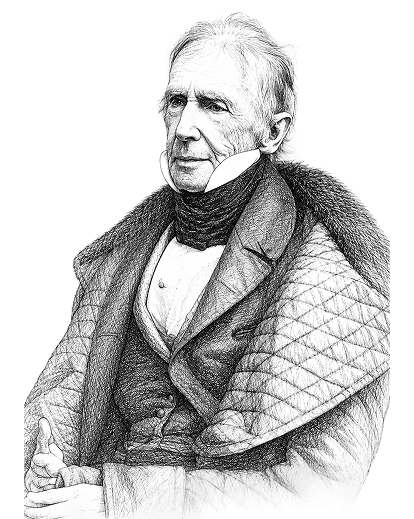
We are left with Crawford Long, who had used ether in 1842, four years before any of them. He told almost no one, published nothing, got on with his life, and was largely left alone, which turned out to be its own kind of vindication.
He died, struck down by a stroke while administering ether to a woman in labour. Every 30th of March, Doctors Day is observed in his memory.
He is by some distance the least interesting story here. Make of that what you will.
“Care for the mother and child first.”